Why the Size and Shape of a Pot Matter
At first glance, a pot is just a container for a plant. The main thing is that it looks nice, matches the interior, and doesn’t leak. But in reality, the choice of pot has a huge impact on a plant’s health and development. The pot creates the micro-world where the root system lives — and that affects everything from leaf growth to flowering.
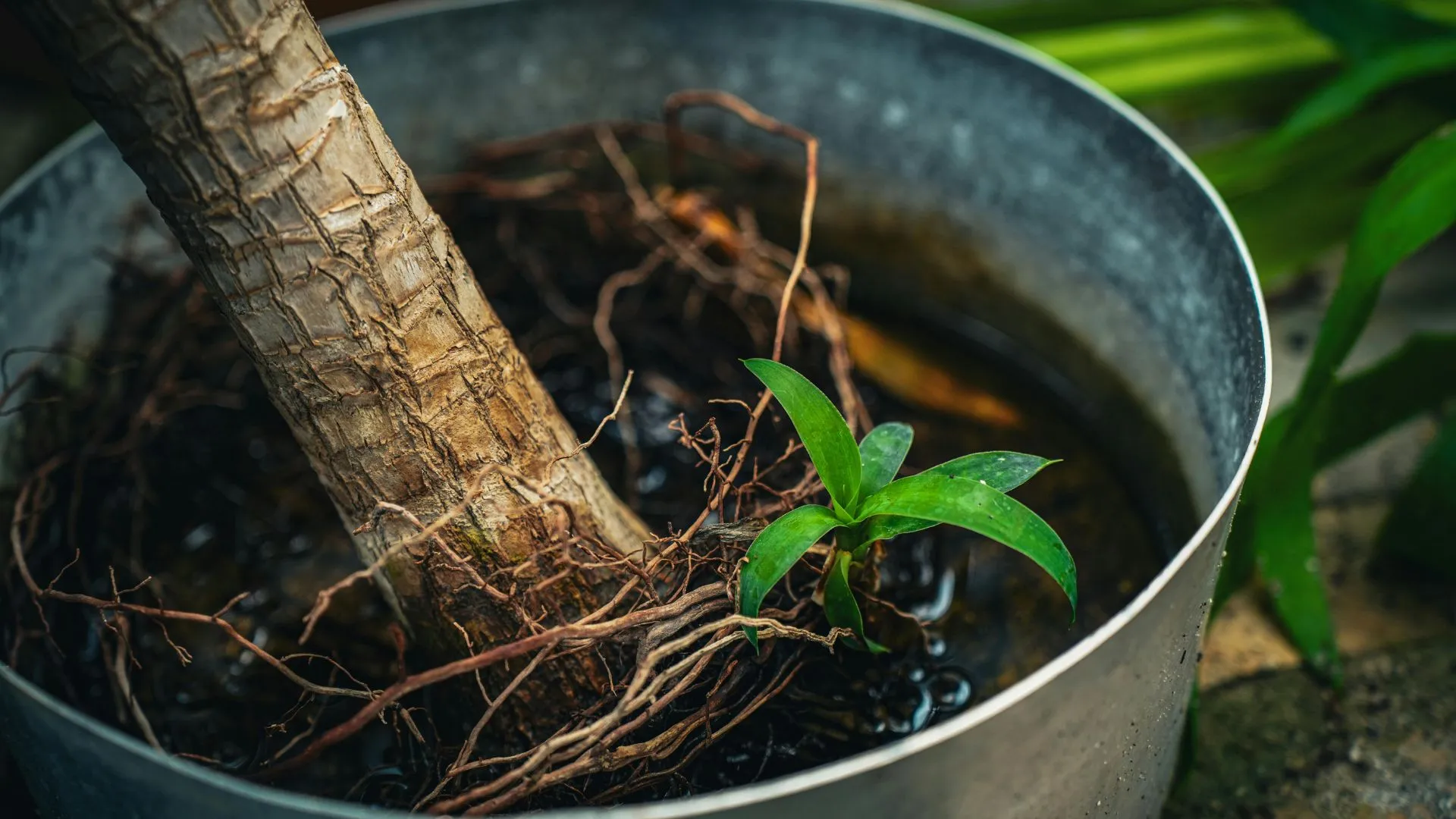
Pot size: it’s not just “bigger or smaller”
When we talk about pot size, we don’t mean only width — depth matters too. The volume of soil should match the needs of a specific plant. Too much space and the roots “lose themselves”; too little and root stress begins.
In a small pot, roots become cramped. They start circling, stop growing normally, and tangle into a tight ball. This limits oxygen, nutrients, and water access. The plant weakens, yellows, and may drop leaves. At the same time, an overly large pot creates other issues: the soil stays wet longer, and the risk of rot increases.
Shape matters too
People often choose pots based on design alone, but shape directly affects root development:
Deep and narrow pots are ideal for plants with long taproots (for example, ficus or bay/laurel).
Shallow and wide pots suit succulents, cacti, and plants with surface-level root systems that spread outward rather than downward.
The wrong shape can force roots to grow unnaturally — bending, breaking, or suffering from poor airflow.
Roots “adapt” to the pot
Imagine the pot as a room. If there’s little space, a person hunches, twists, and feels uncomfortable. The same happens to roots: instead of freely growing down and out, they hit the walls and start searching for new paths. This exhausts the plant, wastes energy, and reduces the chances of abundant flowering or fruiting.
It’s important to understand: choosing a pot isn’t only about looks. It’s a strategic decision that directly affects whether your plant will be strong and healthy — or stressed and vulnerable.
Roots Are the “Heart” of the Plant: How They Work
When we look at a plant, we notice the leaves, flowers, and stems first. But the real “life” happens underground — where the root system grows. Roots are not just an “anchor” in the soil. They feed the plant, supply water, keep it stable, and even interact with microorganisms. And all of this happens… inside the pot.
The main role of the root system
Roots are like a plant’s digestive system. They absorb water and nutrients from the soil and turn them into “fuel” for growth. Each tiny root has special hairs that take in moisture. That water then travels upward through the stem, nourishing every cell.
But that’s not all. The root system also:
Anchors the plant in the soil, providing stability.
Stores nutrients “for later,” like a pantry.
Regulates metabolism — if roots are weak, the plant won’t grow well even with enough light.
Types of root systems and how they behave in a pot
Taproot system (for example, bay/laurel, hibiscus, lemon): the main root grows deep downward. In shallow pots it can start to “knot up.”
Fibrous root system (common in herbaceous and flowering plants): spreads outward. In a tight pot it quickly fills the space and stops developing.
That’s why pot shape and depth matter: different plants require different amounts and directions of space, otherwise the root system suffers.
How roots interact with soil inside a pot
Unlike open ground — where water drains freely and excess moisture goes deeper — a pot is a closed environment. Roots “live” in the same medium you provide. If you overwater, the water has nowhere to go. If you forget to water, the soil dries out and roots begin to die.
So the root system in a pot is constantly balancing on the edge of “survival.” Only the right size, shape, material, and drainage can create the balance between moisture, air, and nutrients.
Remember: strong, healthy roots are the reason a plant grows fast and blooms well — instead of just “surviving” in a pot.
A Small Pot: When There’s No Room to Grow
Sometimes we don’t even realise our favourite plant has been “crying for help” for a long time — simply because the pot is too small. On the outside it may still look fine, but inside it’s real stress. When roots don’t have space, the plant basically “freezes” in development. It’s like a person living in a 2×2 metre room with no ability to stretch, breathe freely, or move.
Signs of root stress
The problem often appears gradually. But an attentive owner will notice:
Growth slows down. New leaves appear rarely or come in small and weak.
Soil dries out too quickly. You have to water more often because roots fill the entire volume and there’s nowhere to hold moisture.
Roots come out of drainage holes. A direct sign the pot is maxed out.
The pot feels light even after watering. There’s almost no soil left — mostly root mass.
Yellowing leaves. Often mistaken for lack of fertiliser or light, but it can be root stress.
What’s happening inside?
In a small pot, roots grow to the limit and then have nowhere else to go. They begin to wrap around themselves, forming a “root spiral.” Over time, this prevents water and air from reaching the centre of the root ball. Oxygen can’t reach the inner layers, meaning root cells start dying.
A dense root mass also leads to nutrient shortages. Even with generous feeding, the plant can’t absorb fertilisers properly because it literally lacks space for normal metabolism.
Consequences for the plant
If ignored, the plant stops developing. No new shoots, no flowering, loss of decorative appearance — and eventually death.
Even the hardiest species become more vulnerable to disease, fungus, and pests. You start “treating” leaves, spraying, changing light — but the problem isn’t above the soil. It’s below, where roots are suffocating.
The solution
As soon as you notice the first signs, it’s time to repot. Not just “move it” into a new pot, but properly loosen the roots, remove excess old soil, treat any damaged areas, and only then place it into a slightly larger pot with fresh, quality mix.
A good rule: choose a pot 2–4 cm wider in diameter than the previous one. That gives new room for growth without forcing the plant into overwhelming adaptation.
A Pot That’s Too Big Is Also a Problem
A common mistake: people assume the bigger the pot, the better. More space equals more growth, right? Sounds logical — but plants don’t always work that way. An oversized pot is not “room to grow,” it’s often extra risk, especially indoors.
Why “more” doesn’t mean “better”
A plant doesn’t recognise a big pot as a luxury upgrade. It reads it as a signal to expand roots first. Instead of growing leaves, flowers, or fruit, it builds an underground “basement.” Result: slower visible growth, delayed flowering, and a weird sense that the plant is stuck.
Also, soil in a large pot stays wet longer. That feels like a benefit, but it’s a trap: water sits in lower layers the roots haven’t colonised yet, creating ideal conditions for rot.
Main risks of an oversized pot
Waterlogging. Too much wet soil compared to root mass turns into a “swamp.”
Fungal infections. Wet soil with poor ventilation is perfect for pathogens.
Poor aeration. The deeper the soil layer, the less air reaches the centre — roots suffocate.
Misleading dryness. The top layer may be dry while the bottom is soaked, so you water again and rot starts.
Typical symptoms
Wilting after watering
Brown or black spots on leaves
No new growth
Soil stays wet for a long time
Bad smell from the pot (a sign of rot)
What’s happening inside?
In a big pot, roots can “get lost.” They grow chaotically and don’t form a compact, efficient system. This leads to weaker nutrient uptake, slower growth, and lower immunity. Such plants get sick more often and respond worse to stress.
When a big pot actually makes sense
Fast-growing plants with aggressive roots (like monstera or banana)
When planting multiple plants in one container (a composition)
Large outdoor pots for wind-stable plantings
In most other cases, it’s better to increase pot size gradually so the plant can colonise the space evenly.
Pot Shape: Deep vs Wide
When choosing a pot, we usually focus on size and ignore shape — but shape is one of the key factors that determines how roots grow and, therefore, how the whole plant performs. Deep vs wide affects moisture distribution, airflow, root direction, and nutrient uptake.
Deep pots: who they’re for
A deep pot is taller than it is wide. It’s best for plants with a taproot or vertically oriented root growth, such as:
Ficus
Hibiscus
Bay/laurel
Citrus (lemon, orange)
Dracaena
These plants naturally push roots downward. In a shallow but wide pot, roots hit the bottom and start circling, forming a root spiral. Inner roots get less water and oxygen, and outer roots suffer from overheating and moisture stagnation.
Wide (shallow) pots: who they’re made for
Wide, shallow pots work best for plants with surface-level or horizontal roots, such as:
Succulents
Cacti
African violets (Saintpaulia)
Ferns
Some trailing plants (ivy, spider plant)
These plants don’t “need depth.” In a deep pot, moisture can accumulate at the bottom and cause rot because the lower soil layer isn’t used efficiently.
Wide pots are also great for compositions — for example, mini succulent gardens.
How to choose the optimal shape
Consider:
Root type: vertical roots need depth; spreading roots need width.
Water habits: shallow pots dry faster; deep pots hold moisture longer.
Placement: on a warm windowsill vs in shade — warmth + wide pots can help soil dry evenly.
How shape affects the microclimate
Deep pots can develop a “dark zone” — soil that stays cool and poorly ventilated, where pathogens thrive. Shallow pots have better airflow but lose moisture faster, so watering may be more frequent.
A good pot shape is like good shoes: when it fits, you don’t notice it — when it doesn’t, problems show up quickly.
Pot Material: How It Changes the Root Microclimate
Most people don’t realise pot material affects temperature, moisture, ventilation, and even growth speed. Sometimes the material becomes a “silent killer” of roots — or their best protector.
Plastic: light and moisture-holding, but no airflow
Plastic pots are common: light, cheap, unbreakable, available in any shape. But they are not breathable.
Pros:
Holds moisture longer (good for plants that hate drying out)
Useful in warm, dry homes
Easy to clean, doesn’t absorb odours
Cons:
Soil can sour due to poor airflow
Water can stagnate, increasing rot risk
Plastic can overheat in direct sun
In plastic, good drainage is critical, and you should check moisture deeper than the surface.
Glazed ceramic: beauty + stable temperature
Glazed ceramic looks great and is popular indoors. The glaze makes it water-tight like plastic, but ceramic tends to maintain steadier temperature.
Pros:
Decorative and stable (heavier)
Doesn’t overheat as quickly as plastic
Doesn’t lose moisture through the walls
Cons:
Heavy
Can crack with temperature swings
Still risky if drainage is poor
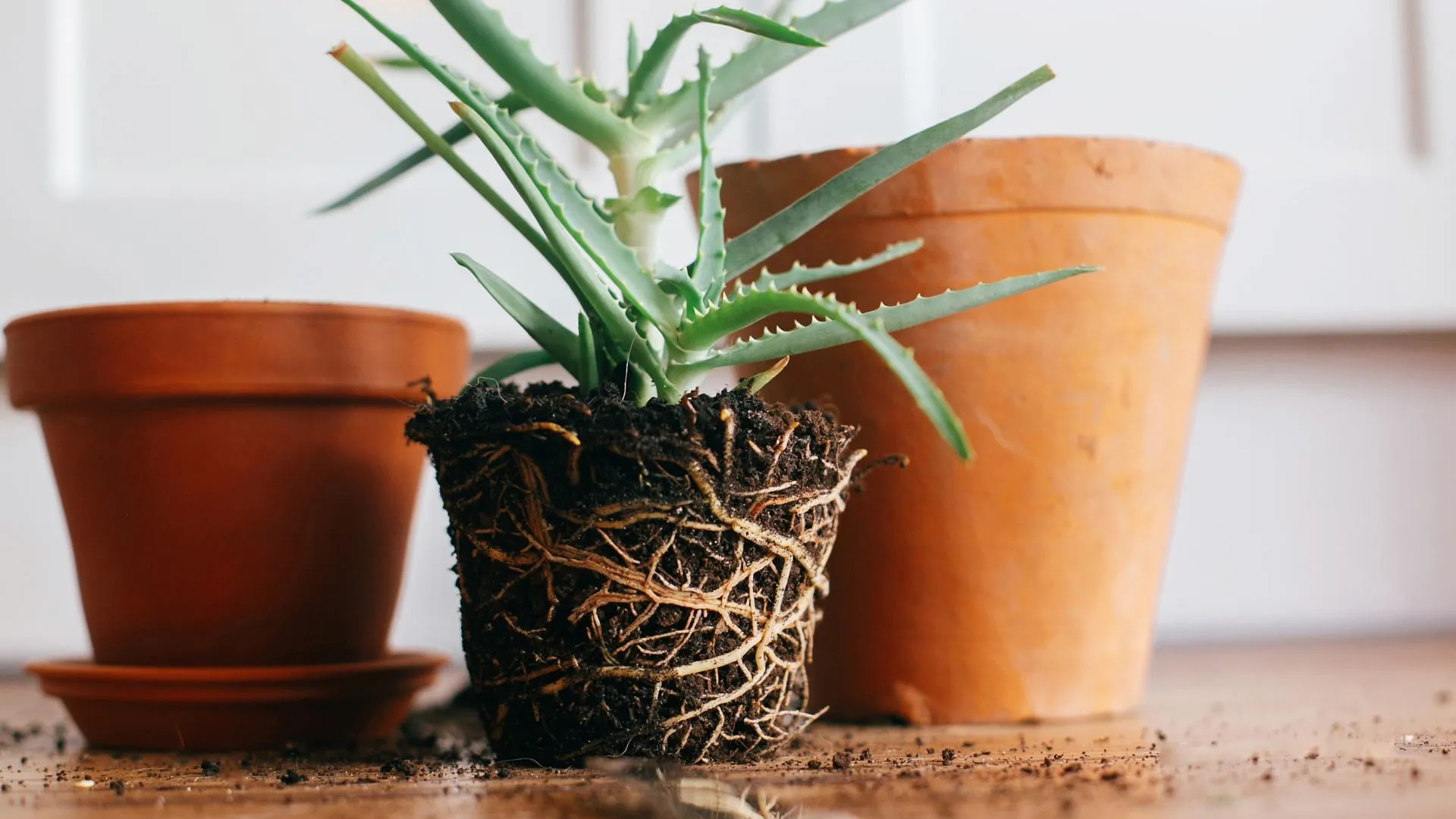
Terracotta (unglazed clay): breathable, but “thirsty”
Natural clay “breathes,” letting air and moisture move through its pores.
Pros:
Better aeration
Helps prevent root rot
Great for succulents and cacti
Cons:
Dries out faster — you’ll water more often
Salt deposits can appear on walls
Breaks easily
Terracotta is perfect for people who like hands-on control and don’t forget to water.
Glass and metal: style over function
They look modern and dramatic, but they’re tricky for roots.
Glass:
Often has no drainage (dangerous long-term)
No airflow
High moisture retention = rot risk
Metal:
Heats and cools quickly
Can oxidise and affect soil pH
Best used as a decorative outer cachepot
These materials are best as outer pots, with a proper inner plastic/clay pot inside.
Conclusion: Choose material based on the plant’s needs
Moisture-loving plants: plastic or glazed ceramic
Succulents, cacti, orchids: terracotta/clay
Design lovers: use decorative cachepots — but keep drainage and airflow in mind
And remember: even the prettiest pot won’t save a plant if the microclimate inside is wrong. Roots don’t care about aesthetics — they only feel living conditions.